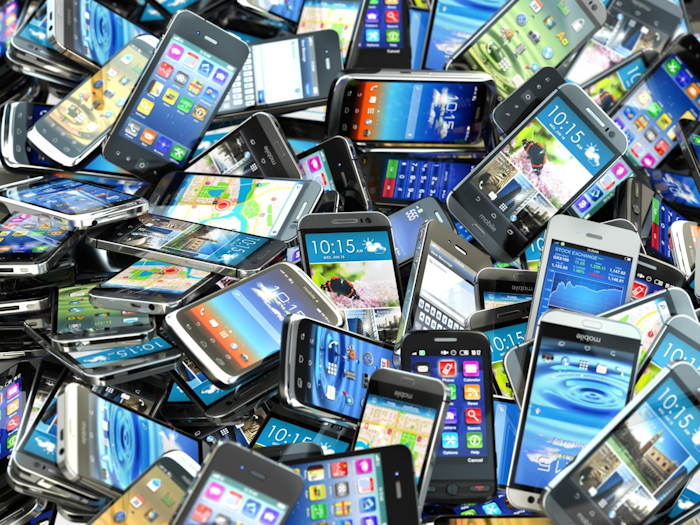
A new smartphone every two years: Back Market warns against the dangers of Fast Tech! On average, residents of Georgia change their smartphones every two years. This term describes the rampant consumption of electronic devices, replaced even before they become obsolete. This consumption pattern is highly polluting, warn waste management specialists. With just three clicks, it’s possible to dress head to toe in fast fashion clothing, cheap and immediately replaced by new trends to constantly encourage purchases. The same principle applies to smartphones and electronic devices. Dubbed “fast tech,” this consumption pattern involves buying trendy new electronic devices before the previous ones are even unusable. A study by Back Market and OpinionWay shows that many American people are unaware of the environmental impact of this consumption pattern. Specializing in the sale of refurbished smartphones, computers, and game consoles, the company hopes to raise awareness. Today, the environmental impact of digital technology is largely underestimated. This industry accounts for 4% of global greenhouse gas emissions. That’s more than aviation. And it could reach 14% by 2040,” explains the head of brand activism strategy at Back Market. According to the study published by the company, only 52% of American people say they are aware of the environmental consequences of this industry. This score is far lower than that of the oil, electricity, and gas industry (79% of respondents consider it polluting), or the road and maritime transport sector (73% consider it polluting). Young people, often more familiar with the digital world, are the most aware segment of the population on this issue. 69% of 25-34 year olds consider tech to be a polluting industry.
Toxic Waste Piles Up
Back Market points out that 80% of the pollution generated by buying a smartphone occurs even before its first use. The main problem lies in the environmental cost of producing such devices. Made from rare materials and components sourced from all corners of the globe, a smartphone has time to travel the world before landing in the pocket of its final buyer. Adding to this polluting production is the short lifespan of these devices, with the average user keeping a smartphone for two years before replacing it. We are in a real throwaway culture. 62 million tons of electronic waste were produced in 2022, 81% more than in 2010, according to figures from the United Nations. This is a waste management nightmare requiring hiring dumpster rentals to massively dump this waste. Once discarded, this waste accumulates and often ends up, like surplus fast fashion clothing, in open-air dumps across the African continent. This is particularly true in Kenya, a country where graveyards of unused technological devices are growing. This is toxic waste, dangerous for local populations. The amount of waste is increasing five times faster than recyclingrates. If we don’t encourage people to reuse, we won’t be able to recycle all of this.
The issue of the cost of spare parts
While some consumers succumb to marketing hype, others abandon their smartphones when they become defective (battery, screen, processor, etc.) because repairing them would be too expensive. This cost can be so significant that 45% of consumers prefer to increase their spending and buy a new one. However, the study highlights that 94% of them would be willing to keep their devices longer if they had a repairability guarantee. Like insurance that would allow them to obtain spare parts at an affordable cost to replace defective ones. The cost of spare parts is at the heart of current debates. Already applicable to televisions and to washing machines, the Ministry of Ecology aimed to impose a durability index on smartphones. Using a score out of 10, this data would have allowed buyers to understand the durability of their devices, based on the quality of their component parts, recycling options, and the price of spare parts for repairs. Energy labels will appear on smartphones sold in the nation. These will include a different repairability index. However, unlike other proposals, this index does not take into account the cost of spare parts, as well as about ten other criteria present in the text. Brands could obtain good repairability scores even though repairs are, in reality, financially inaccessible. Environmentalists lament this scaled-back ambition.
Less than one in two US residents buy food products in bulk at least occasionally, down 7 points since 2021. While some practices are becoming more and more established, such as donating clothing and equipment or reselling on second-hand platforms, others, on the contrary, are in decline, reveals a new study. Over the years, sorting has definitely become a habit. But reducing waste is still difficult for a large proportion of American households. A large survey of more than 12,000 people by Dumpster Rental HQ published this Tuesday on the occasion of the Week for Waste Reduction, shows all the efforts that still need to be made to change habits in this area. While each American person produces an average of more than 800 kg of waste per inhabitant per year according to the EPA, the vast majority of respondents say they are involved in their daily lives to limit it. Americans are very committed to waste, the study notes.
Waste sorting effectiveness
However, when it comes to getting their hands dirty, residents are a little more idle. Admittedly, 90% of American people say that they follow sorting instructions well regardless of the category of waste. But beyond sorting, they still struggle to reduce their waste, the study notes. Only 66% of people consider it “easy” (-4 points compared to the 2020 barometer), i.e. a gap of 24 points between this indicator and the share of American people who believe that it is easy to sort their waste. On the menu of complexities, respondents cite a whole series of explanations, from the fear of having to change too many things in their daily organization (30%) to giving up certain products that they like (30%). But also a lack of information on the instructions on the subject (29%) or even a higher cost (27%). Many people also deplore a lack of support and resources to reduce their waste, whether from their community (32%) and even more from their company (45%).
Bulk buying is running out of steam
In detail, some eco-friendly actions are becoming increasingly popular, such as donating clothing and equipment to associations, recycling centers or in collection bins (83% do it at least occasionally, +17 points between 2021 and 2024). Significantly more taken up by women (87% compared to 78% of men) and those aged 50 and over (86% compared to 76% of those under 35), it has nevertheless spread widely to the entire population. Another practice that is growing is resale on second-hand platforms such as ebay. According to the authors of the study, we can assume that it will be able to expand its audience in the coming years given that it is still currently the preserve of a specific population: women, those under 50 and members of the most affluent households. Other practices are stagnating, such as the choice to favor tap water over water in plastic bottles (72%, +1 point between 2021 and 2024), or the preference for repairing to make equipment last rather than throwing it away (81%, +1 point). Other behaviors are even tending to decline, highlighting the need to re-engage Americans in these good waste-reducing practices, the study emphasizes. This is the case, for example, of the purchase of bulk food products (49%, -7 points compared to 2021), the popularity of which seems to be running out of steam. The renunciation of disposable products (diapers, towels, disposable tableware) (67%, -4 points), the fact of favoring short circuits (73%, -2 points) are also decreasing and the use of dumpter rentals. So many signals that underline the need to identify new levers to strengthen the citizen commitment to reduce its waste and place it at the same level as the commitment to sort it properly, concludes the study.